
My Week at an Unstructured Writer’s Retreat in the Tuscan Hills
Europe and writing retreats have become synonymous for me over the past few years since the pandemic lockdowns. Any trip there now involves romantic notions of tucking myself away in some remote, naturally beautiful location, sipping coffee while I write, taking breaks every now and then to soak in an inspiring view.
My latest trip to Europe, through September and October, was going to be my longest yet at seven weeks. I wanted to pause somewhere in the middle to slow down, not just for my energy, but because this was the first time I would be working part of the time as a travel writer, and I had some articles due while I was on the road.
I would be in Italy during the middle stretch of the trip, and ideally I wanted to go on a retreat after Bologna and before Florence, given I needed to write about Bologna pretty much straight away. When I found Casale di Clio, located in the Tuscan hills an hour from Lucca, I knew it was just what I needed – and lucky me, the dates were available!
The Casale di Clio retreat was a little different to the previous two writing retreats I’ve attended in that it was unstructured; so rather than having set workshops, meal times, blocks of free time or other activities, nothing was scheduled here. The owners, couple Adrian and Tizi, simply provided you the time and space to work on any project of your choosing (the retreat hosts artists as well as writers).
It was self-catered – with one welcome dinner included and the option to pay for extra dinners – and your time was yours to explore the area a little, or simply keep your head down and work. My aim, naturally, was to do both. Allora! Let’s see how the week went.
Day 1
It was late afternoon when I arrived by train into Bagni di Lucca, the closest train station to Vetteglia, the small village home to Casale di Clio. Tizi met me at the station, and we stopped at a grocery store on the way to the retreat so I could pick up some items for the next few days (Tizi did reassure me there was a small well-stocked shop not too far from them, should I forget anything).
After a winding drive up into the hills, we arrived. The stone house was picturesque, with the rustic charm typical of Tuscany; it looked out over the valley and opposite hillside, as did the window by the desk in my room – bellissima.
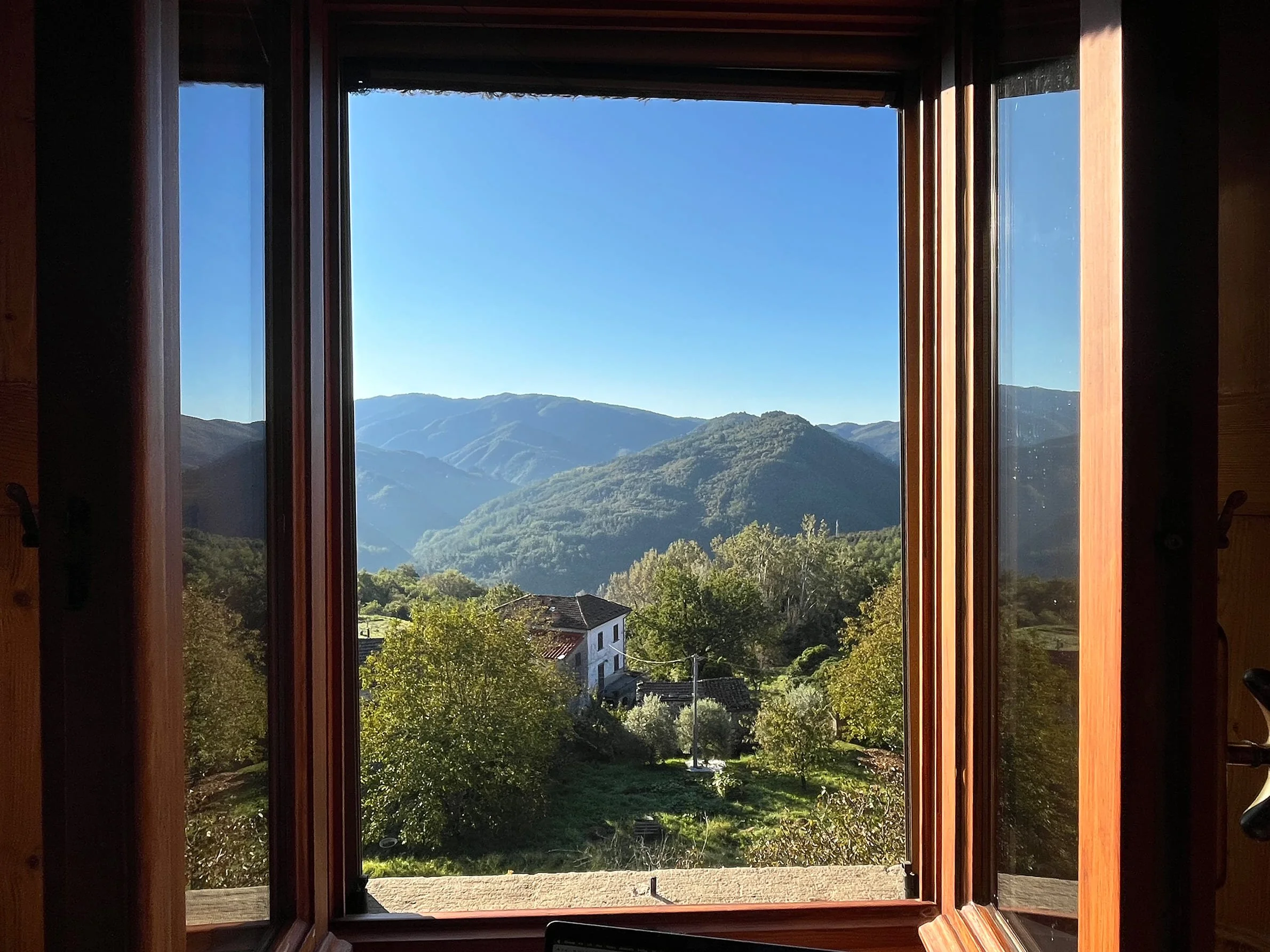
The view from my window at Casale di Clio
I met Adrian at check in, after which we went on a short tour of the house and surrounding paths. For such a small village (about 40 inhabitants from memory), it was actually a little confusing as some of the houses, such as Casale di Clio, were attached to each other, and it was hard to tell where one ended and the next began.
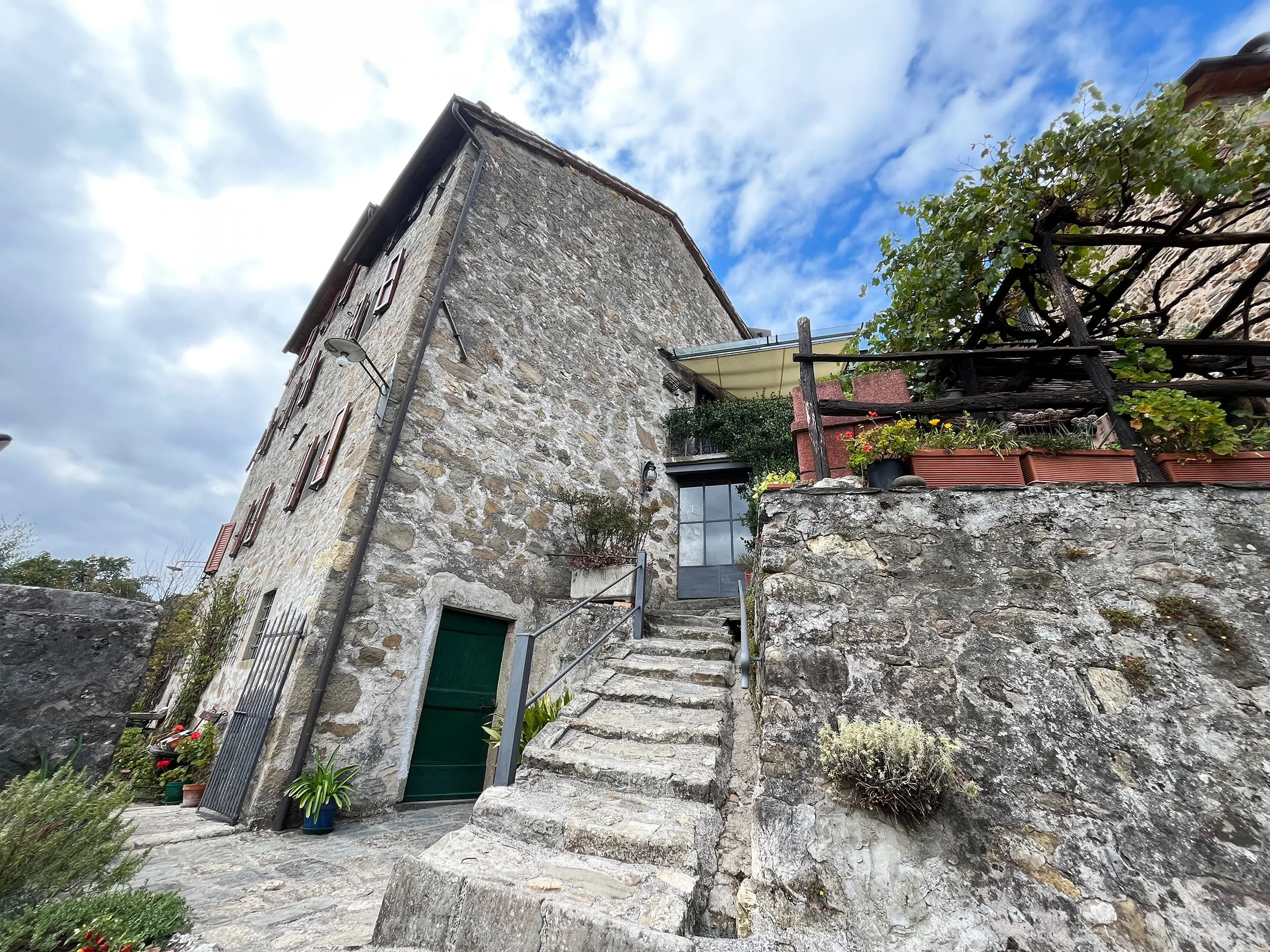
Looking up the front steps of Casale di Clio
Afterwards it was time for the included welcome dinner, which was just me with Adrian and Tizi (another two guests would arrive in a couple of days). Made by Tizi, it was so nice to have a homecooked meal again after almost four weeks of travelling. Plus, you can never have enough pasta and torta (cake) when in Italy!
Over dinner, I learnt more about the retreat’s history. Tizi and Adrian bought the place a couple of years prior when they moved from the UK (Tizi is originally from Italy), and throughout peak season they run mostly back-to-back weeks with a maximum of three to four guests.
After dinner, Adrian and Tizi retreated to their quarters downstairs, leaving me to enjoy the fireplace in the cosy lounge. The next day, it was time to start work.
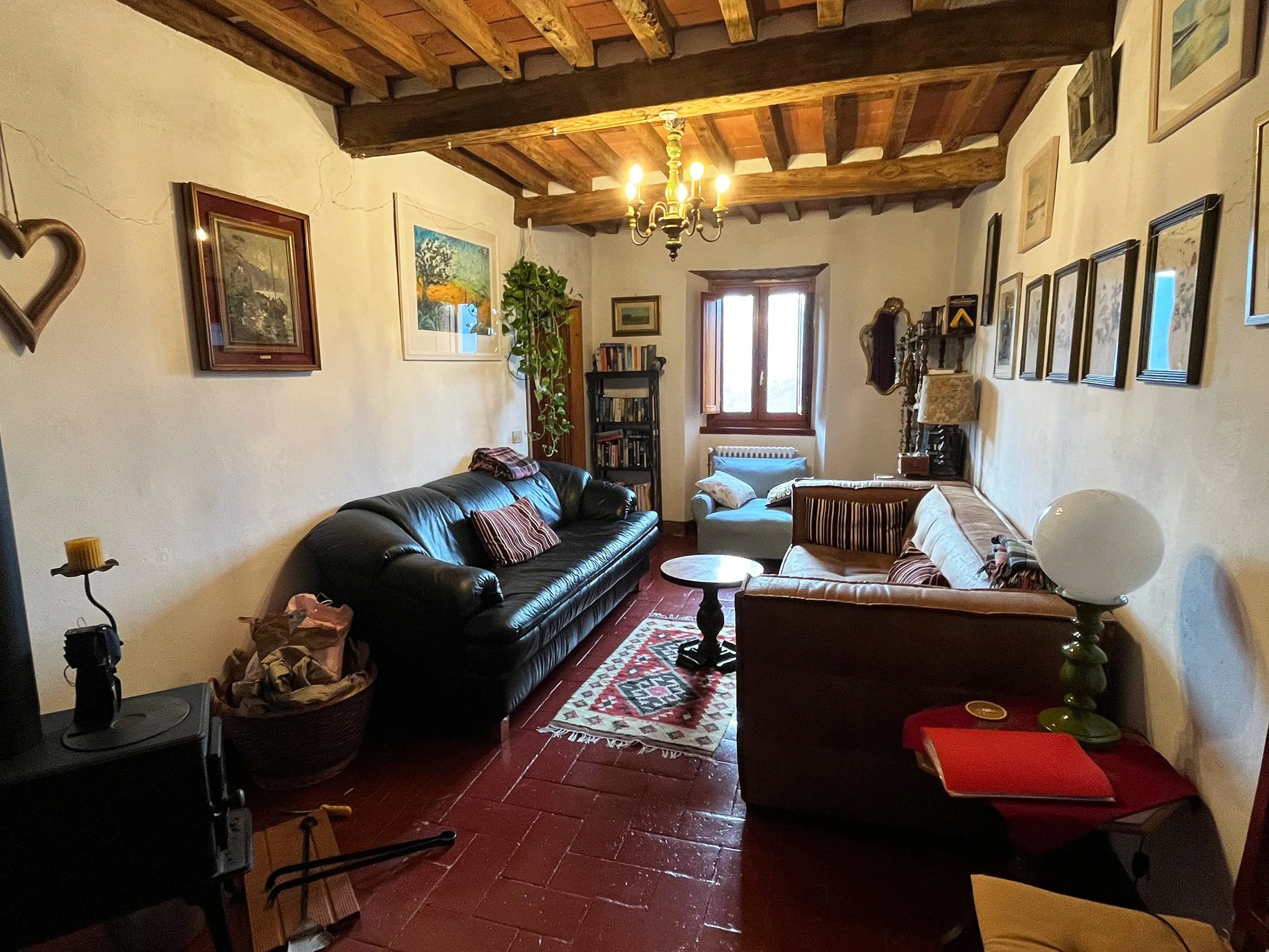
The cosy lounge at Casale di Clio
Day 2
But first, breakfast and yoga on the terrace (I was on holiday, after all). Then I fired up the moka pot, or cafeteria, as my parents would say, for my morning coffee, in what was going to become a daily ritual. Afterwards, I worked at my desk for an hour or so, before I met up with Tizi to walk to the closest store, Alimentari da Erica.
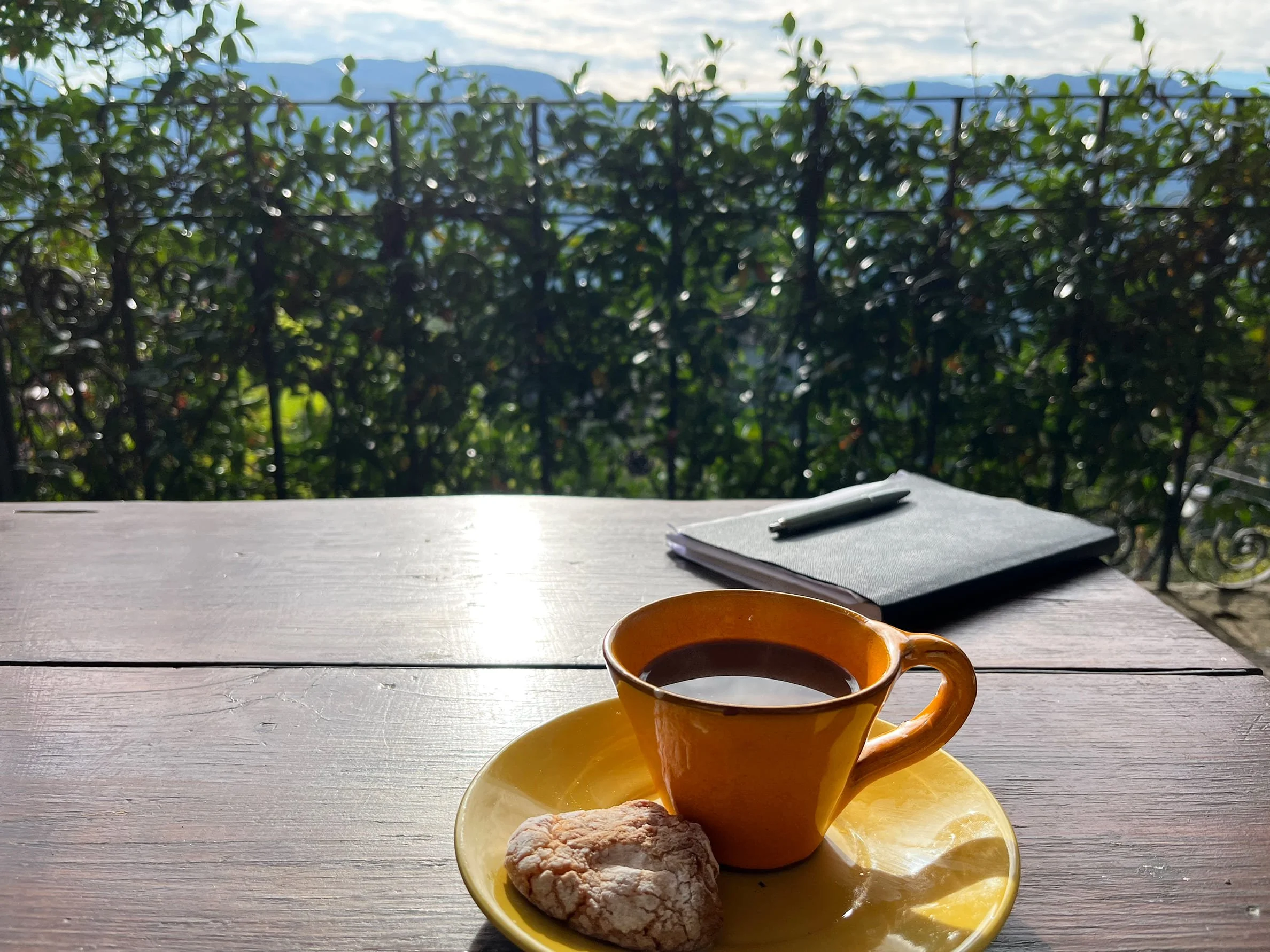
How my mornings typically started on retreat
It was around a 20-minute walk on a path through the woods. Given the time of year, the ground was littered with chestnuts. I had never seen them in nature before, only ready to buy at a grocery store, and it seemed incredible to me there were so many just lying around on the path! If only Australia didn’t have such strict biosecurity rules.
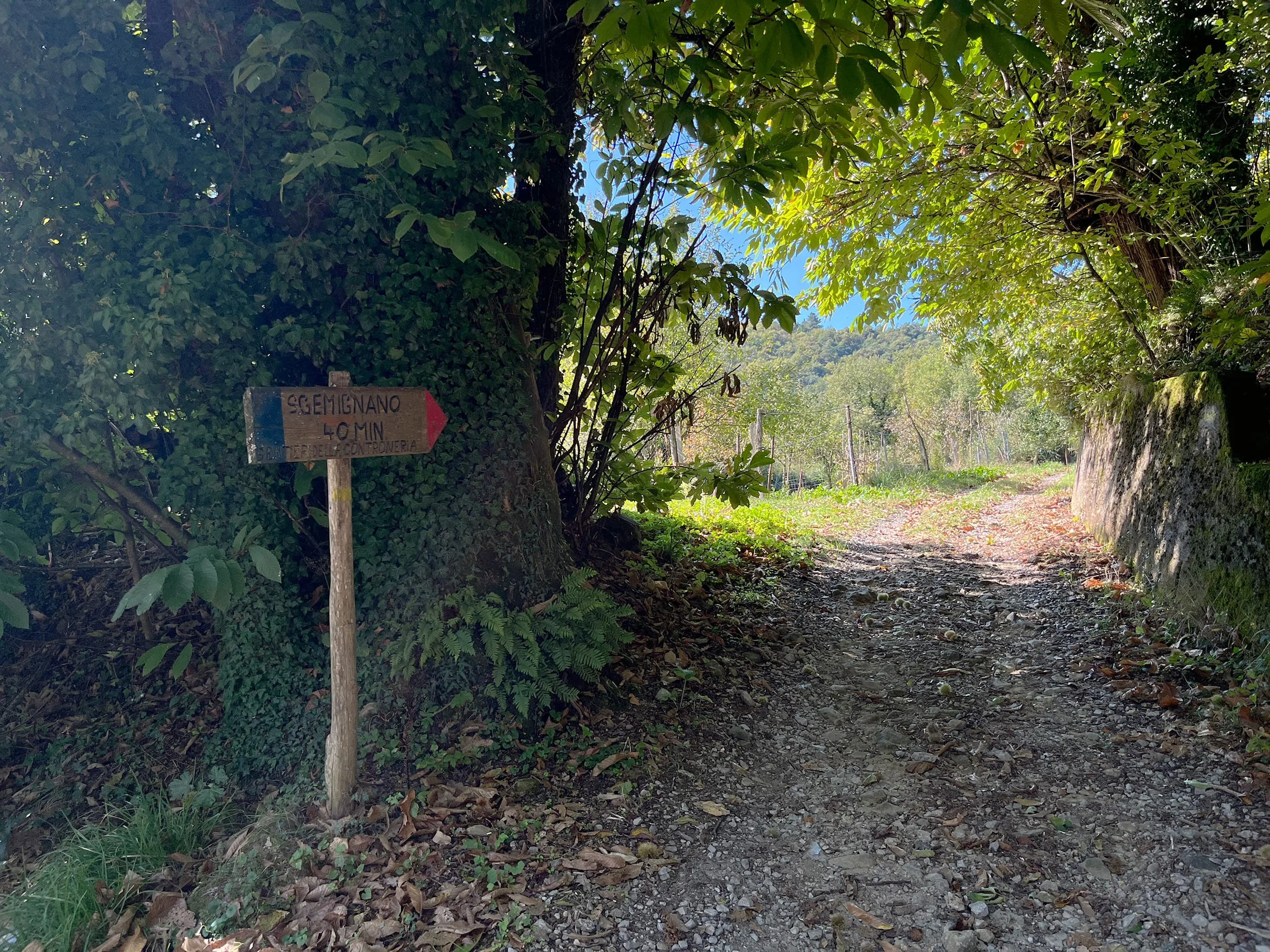
The start of the walk to Erica’s (which is in San Gemignano, not to be confused with the popular San Gimignano)
The path eventually sloped up to the road, and we entered Erica’s shop, where Erica was ready to greet us behind the counter. After a few minutes of chit-chat, I used my beginner Italian to order some biscotti for my coffees back at the retreat (don’t worry if you can’t speak Italian – with a little of Erica’s English and pointing, guests can manage their own order). The view from the back of the shop was seriously stunning, overlooking the valley, and there were a couple of chairs and tables set up to enjoy a coffee from. I knew I needed to come back before the week was over.
I worked solidly the rest of the afternoon, and that night joined Tizi, Adrian and a guest from the previous week for aperitivo back in Bagni di Lucca, which is apparently their Friday ritual. We capped off the night with takeaway pizza eaten back at Casale di Clio.
Day 3
The day’s routine was very similar to the one before: eat, walk, work, repeat. Just the view outside my window changed: long clouds swarmed low over the hills, and I found myself entranced by the moody scene.
In the afternoon, the two new guests arrived: a fellow Aussie, Cynthia (we do get around) and German, from Spain but living in England. I joined them for their welcome dinner – another night of no cooking, oh well – where we discussed our various writing projects. After spending the day on my own, I found having dinner with other writers the perfect stimulation, not to mention inspiration for my own work.
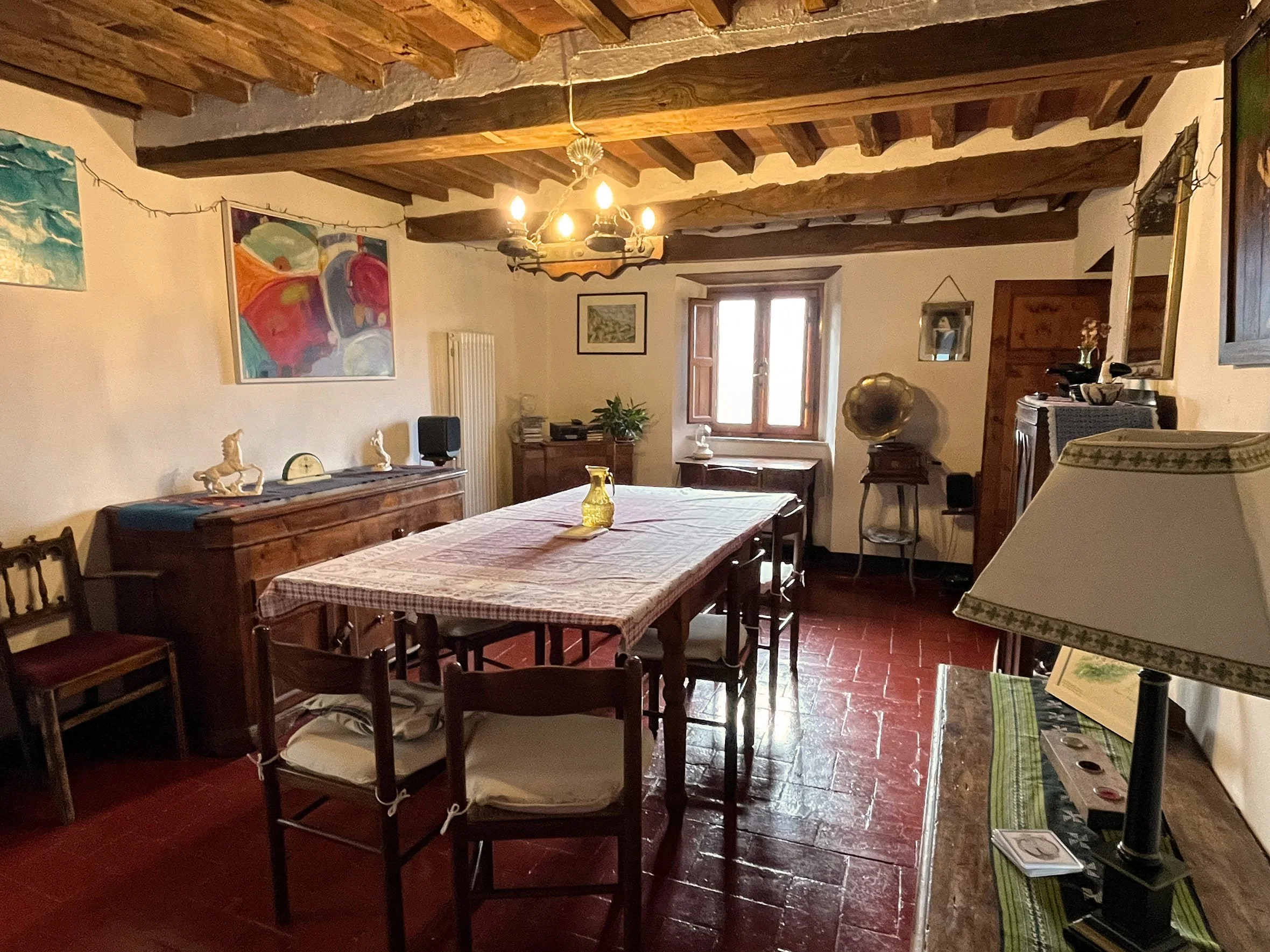
The dining room where we gathered every night to share a meal together
Day 4
Sunday was set apart by a long lunch at a neighbouring village, San Cassiano. The weather had improved again, and the 40-minute walk along the road skirting the hillside to Bar Santina was perfect for a Sunday stroll.
Now, when Italians say a long lunch, they really do mean long. We were there that day for almost four hours as they served course after course. It was a set lunch – we didn’t even see a menu – and according to Tizi and Adrian, it’s exactly the same food each time (plus wine and soft drink is included). First, focaccia to graze on; then TWO pasta courses (heaven), tortelloni in ragu sauce and a short pasta with mushrooms; thinly sliced beef and roast potatoes for a main; and finally, coffee and a choice of dessert (I went with a classic tiramisu).
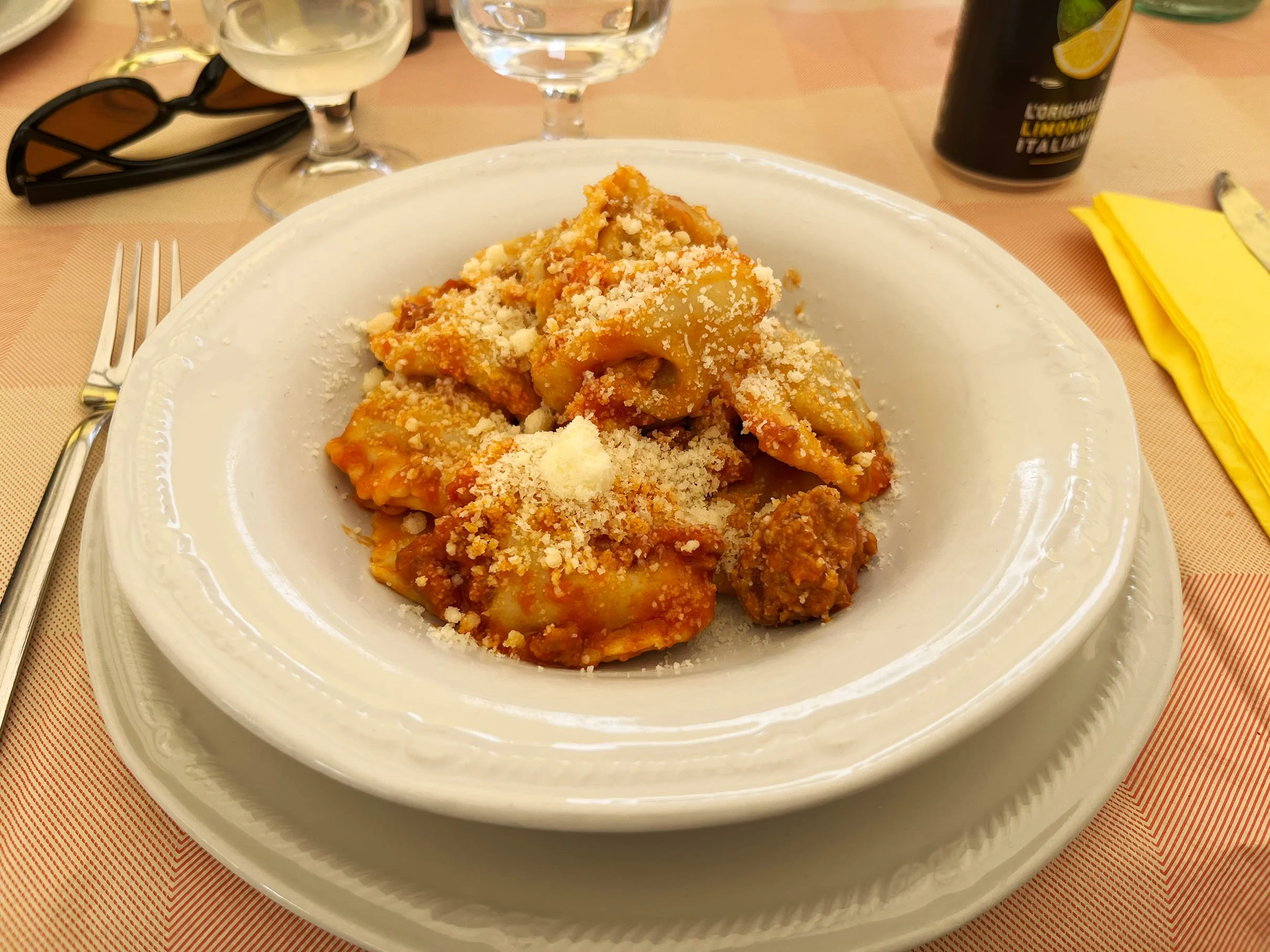
One of the pasta courses at our long lunch
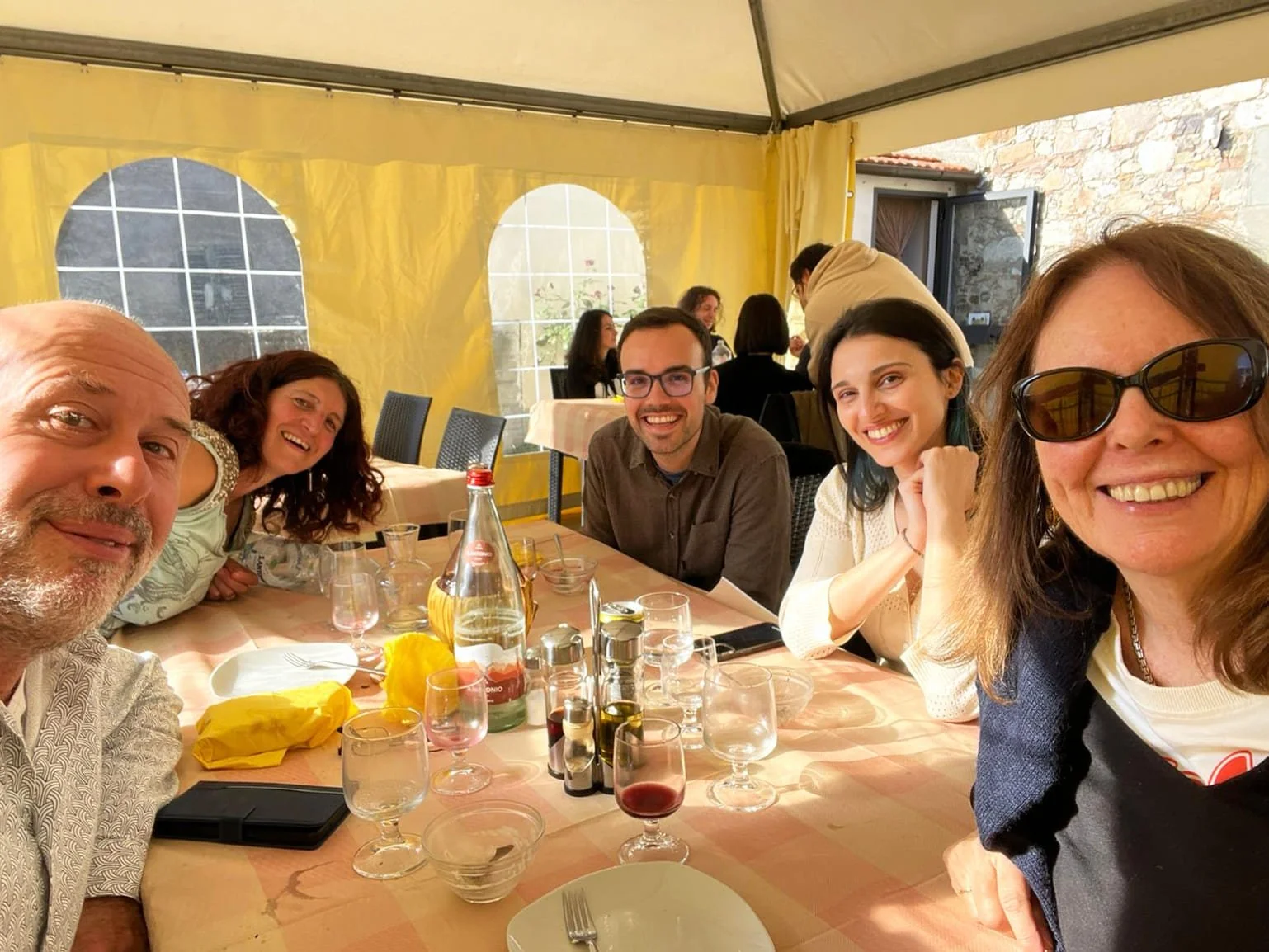
From left to right: Adrian, Tizi, German (pronounced Herman), myself, Cynthia
For our post-lunch passeggiata we explored the town’s church, before returning to the house. I took the opportunity of not needing dinner after such a filling meal to get some more work done, and I submitted my first article that was due, a piece on Bologna for the NZ Herald.
Day 5
Monday, and back to routine. I had another article due later in the week for Dwell’s One Night In series, so most of the day was spent writing at my desk, with my usual breaks for coffee, meals, and a walk.
Come evening, I cooked my own dinner (ricotta tortelloni with zucchini and chickpeas – yes, I love filled pasta). Despite some of us taking care of our own dinner, we still all sat down together to eat and for some leisurely conversation before it was time for bed.
Day 6
This was going to be my last full day at the retreat, and with most of my work completed, I was ready to explore the area a little more. I started with walking to Erica’s shop in the morning for my coffee with a view, spontaneously adding an almond tart to the experience.
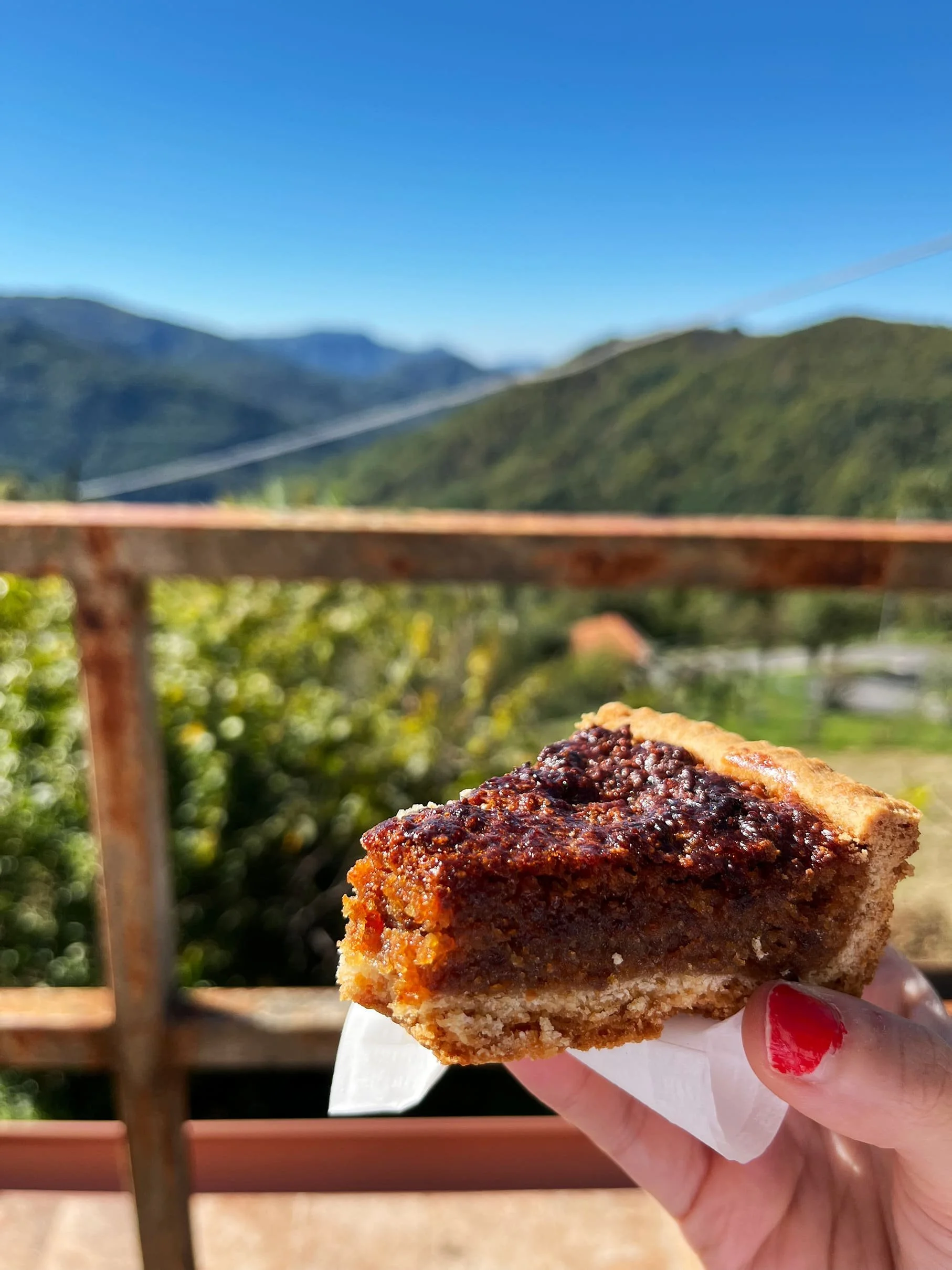
Mm mmm
After lunch, I hopped on a bus to Bagni di Lucca, where Tizi had helped me book an appointment at the local spa. Bagni di Lucca translates to “baths of Lucca”; the area was once well-known for its thermal springs, and is home to Europe’s oldest casino. During the 19th century it attracted many famous visitors, including Puccini and poets such as Lord Byron, Percy Bysshe Shelley, Elizabeth Barrett Browning and Robert Browning, and novelist Mary Shelley.
This rich history is one of the reasons Adrian and Tizi had chosen the area for their retreat, and I was keen to see some of the town’s historical sites before my appointment. I started with the house where poets Robert Browning and Elizabeth Barrett Browning lived while holidaying here, as it was closest to the bus stop. The double-storey beige house had richly decorated windows and a small plaque stating the years the famous poets were in residence (I’m not sure what the house is used for today, but it wasn’t open to the public).
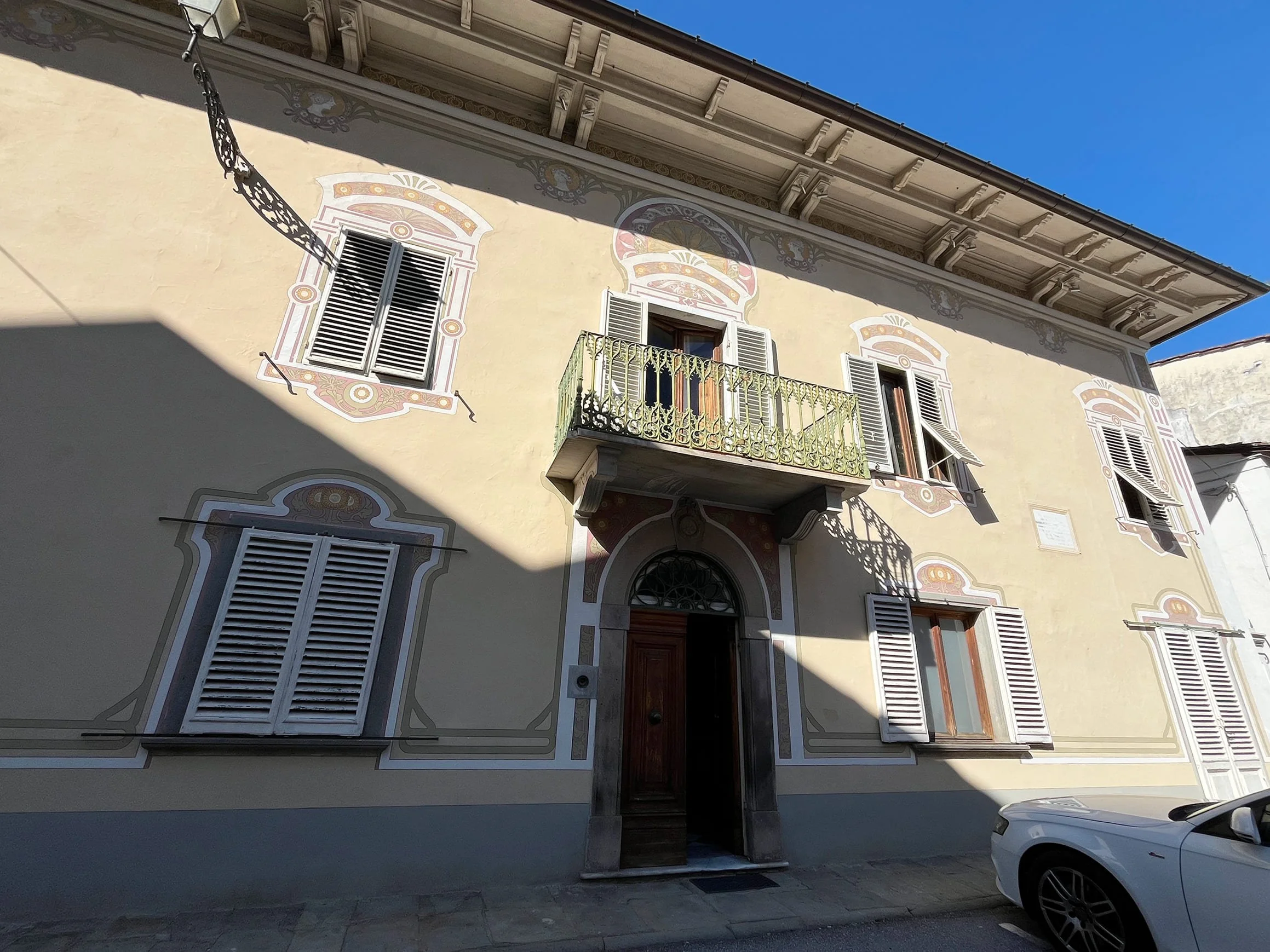
The house where Robert Browning and Elizabeth Barrett Browning stayed
Then it was time for a wander up the hill to the old villas: with some help from a Google search, I spotted Lord Byron’s villa, the Shelleys’, and a that of a famous French philosopher, Montaigne. To think that for over a hundred and fifty years, writers had been drawn to this same area for rest and inspiration was something special, and I was so glad I had made the effort to visit.
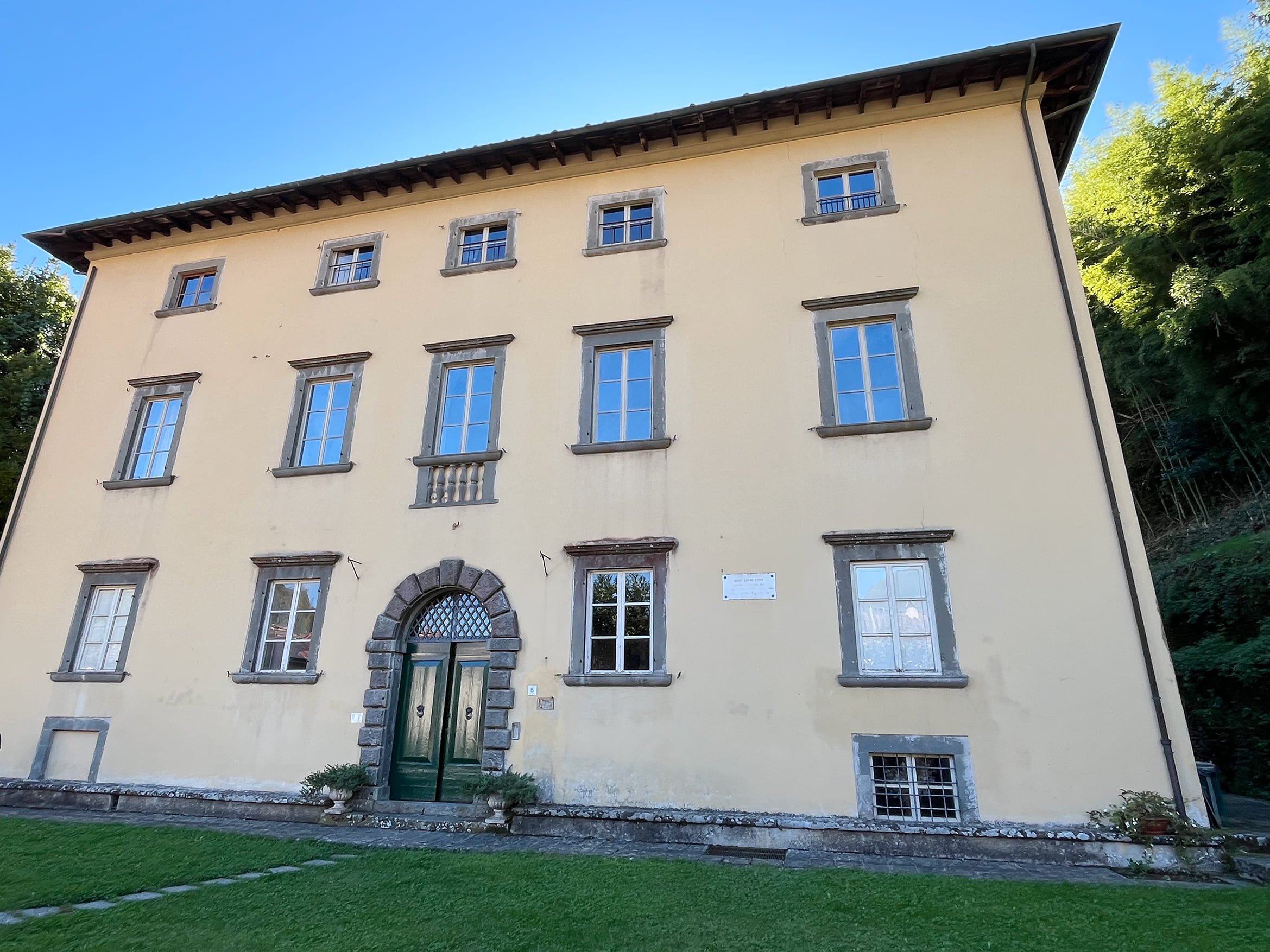
The villa where Lord Byron stayed
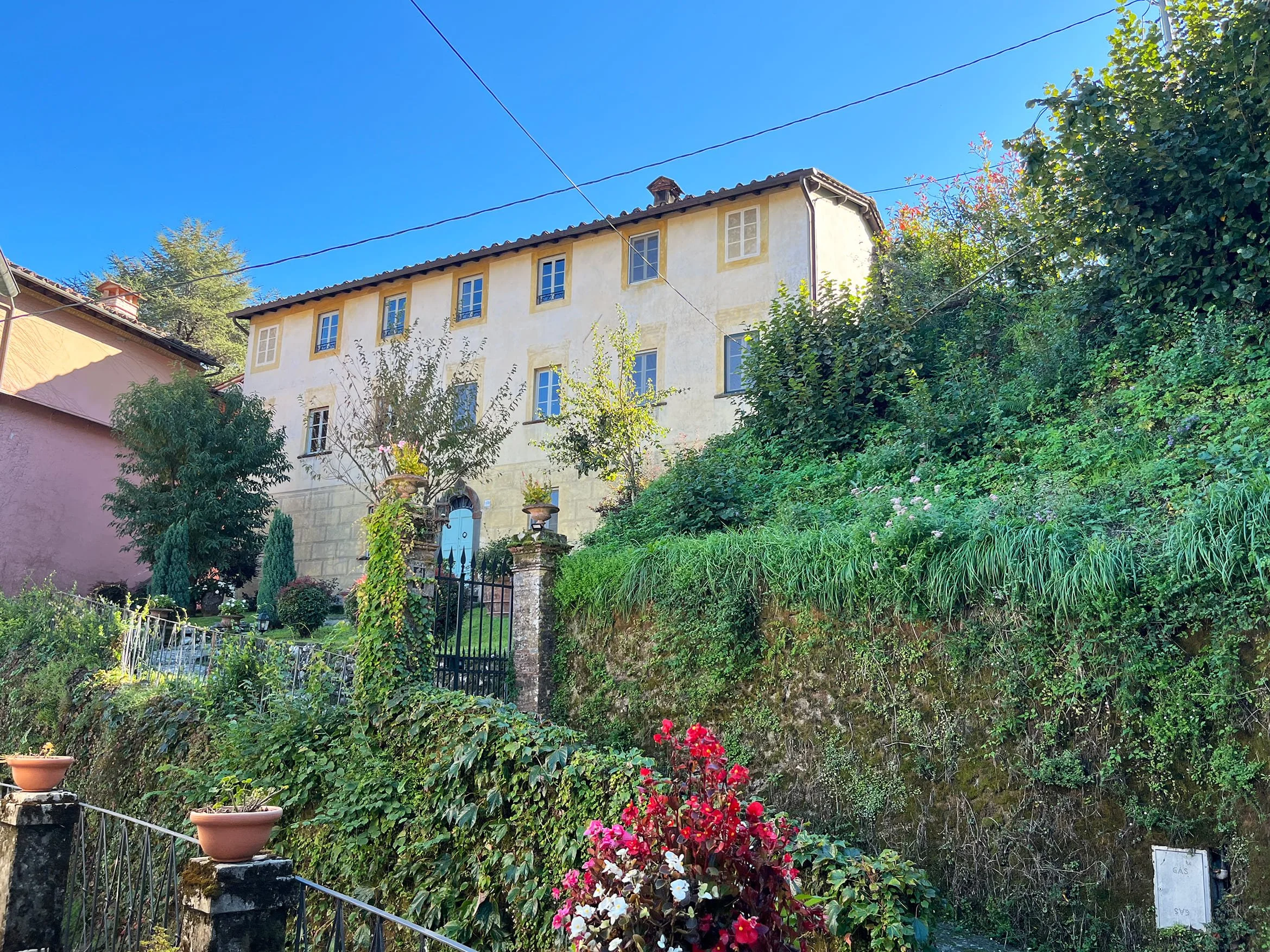
The villa where the Shelleys stayed
Walking back towards the river, I quickly popped into the town’s library, which was inside a church (how Italian). It was small, but absolutely gorgeous. Then I detoured via the bridge where Robert Browning apparently proposed to his wife, Elizabeth; there was no missing this plaque, and if it really was the spot, then Robert did a fantastic job.
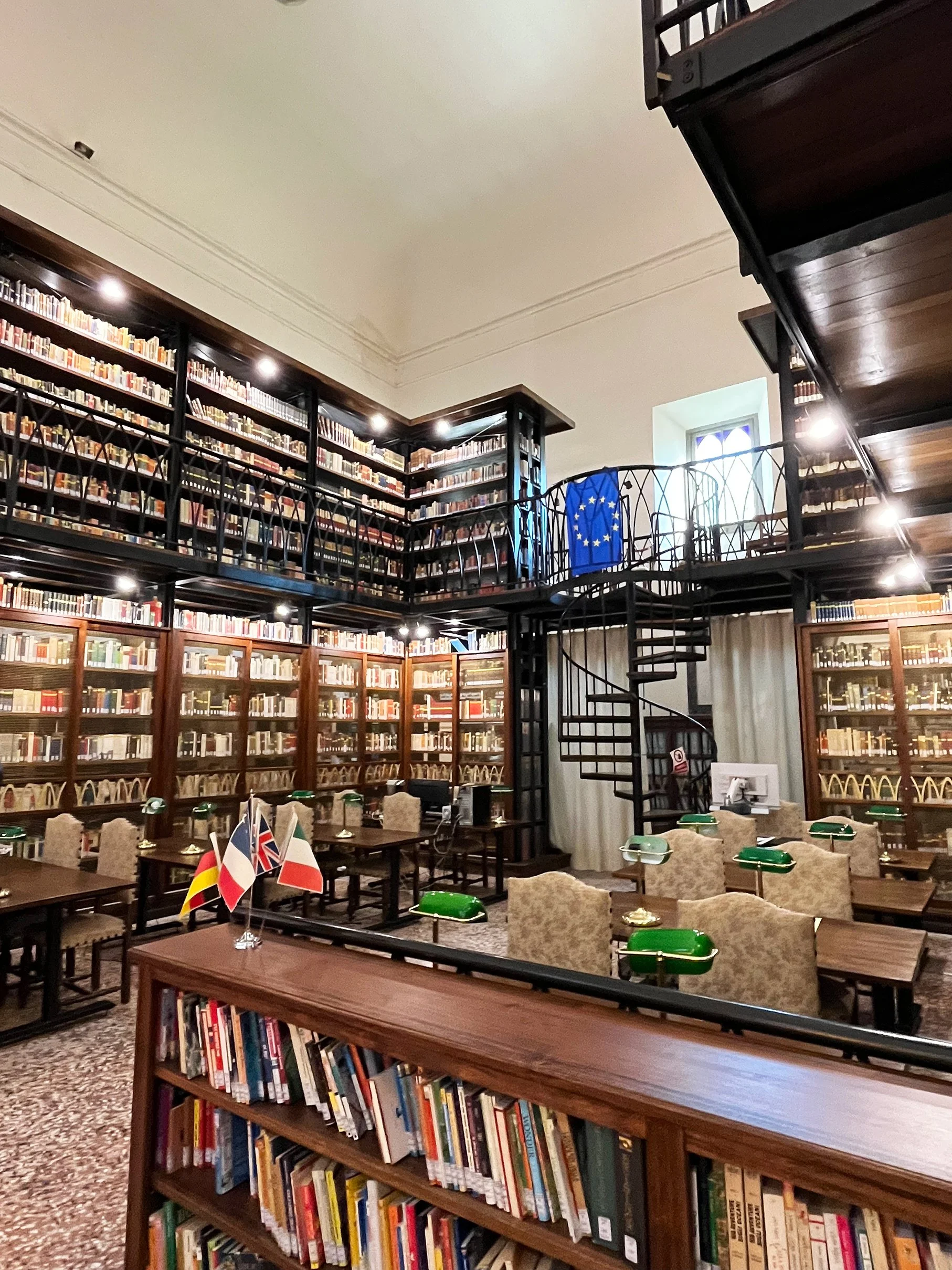
You had me at the spiral staircase
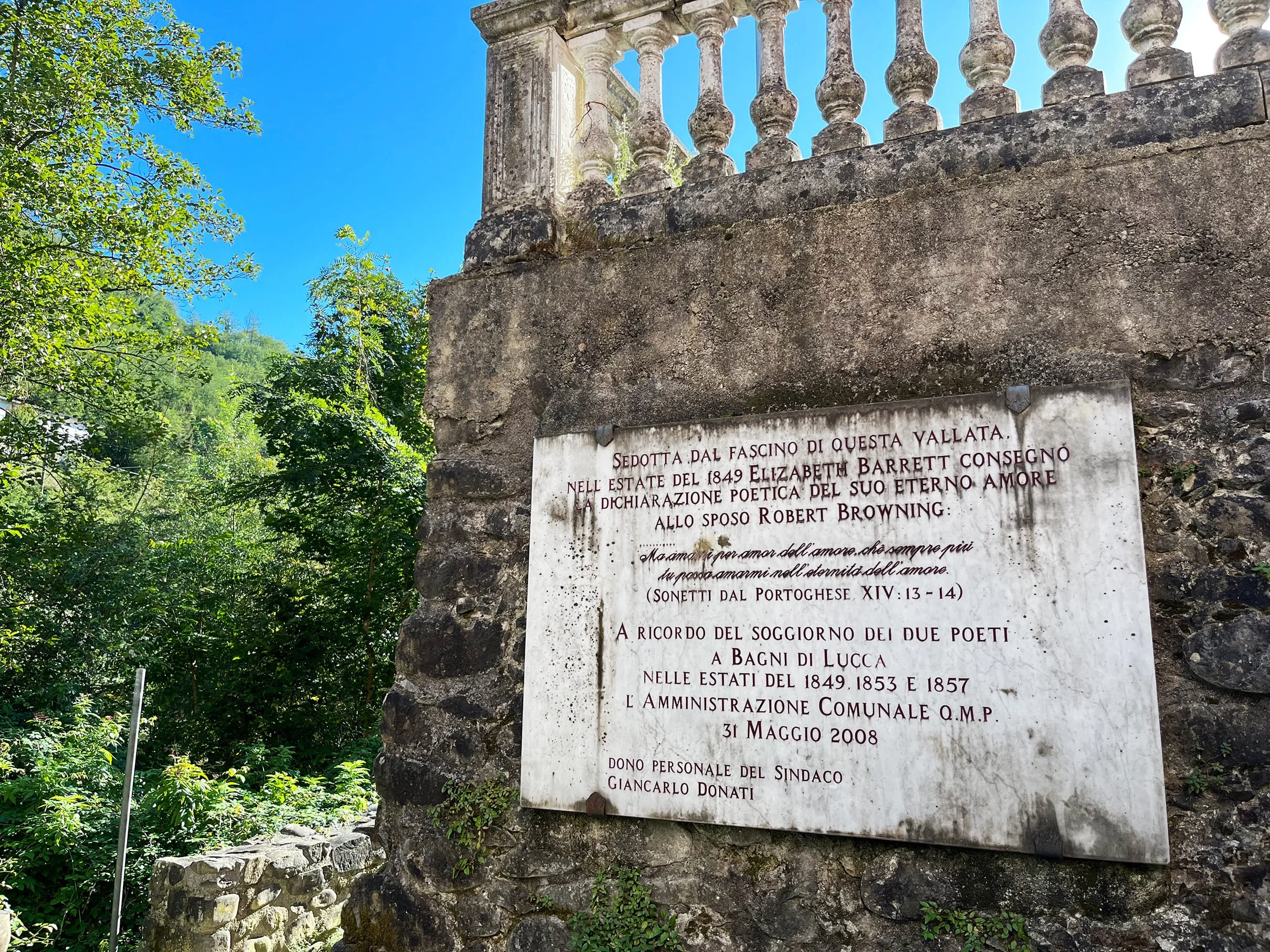
The scenic spot where Robert Browning apparently proposed
My booking was at Terme Bagno Bernabò, which was about a 20-minute walk along Viale Roma. The road followed the path of the river, and I took some quick snaps at the next bridge (so pretty!) before I arrived at the spa. Its history is fascinating, like so much in the area, as I was discovering. Built in 1810 by Napoleon’s sister, Elisa Baciocchi, it was named after a Florentine man named Bernabò, who recovered from a skin condition after bathing in the area’s thermal mud. Its reception was beautiful, with black and white floor tiles, soft pink walls, and an arched ceiling with some simple blue frescoes.
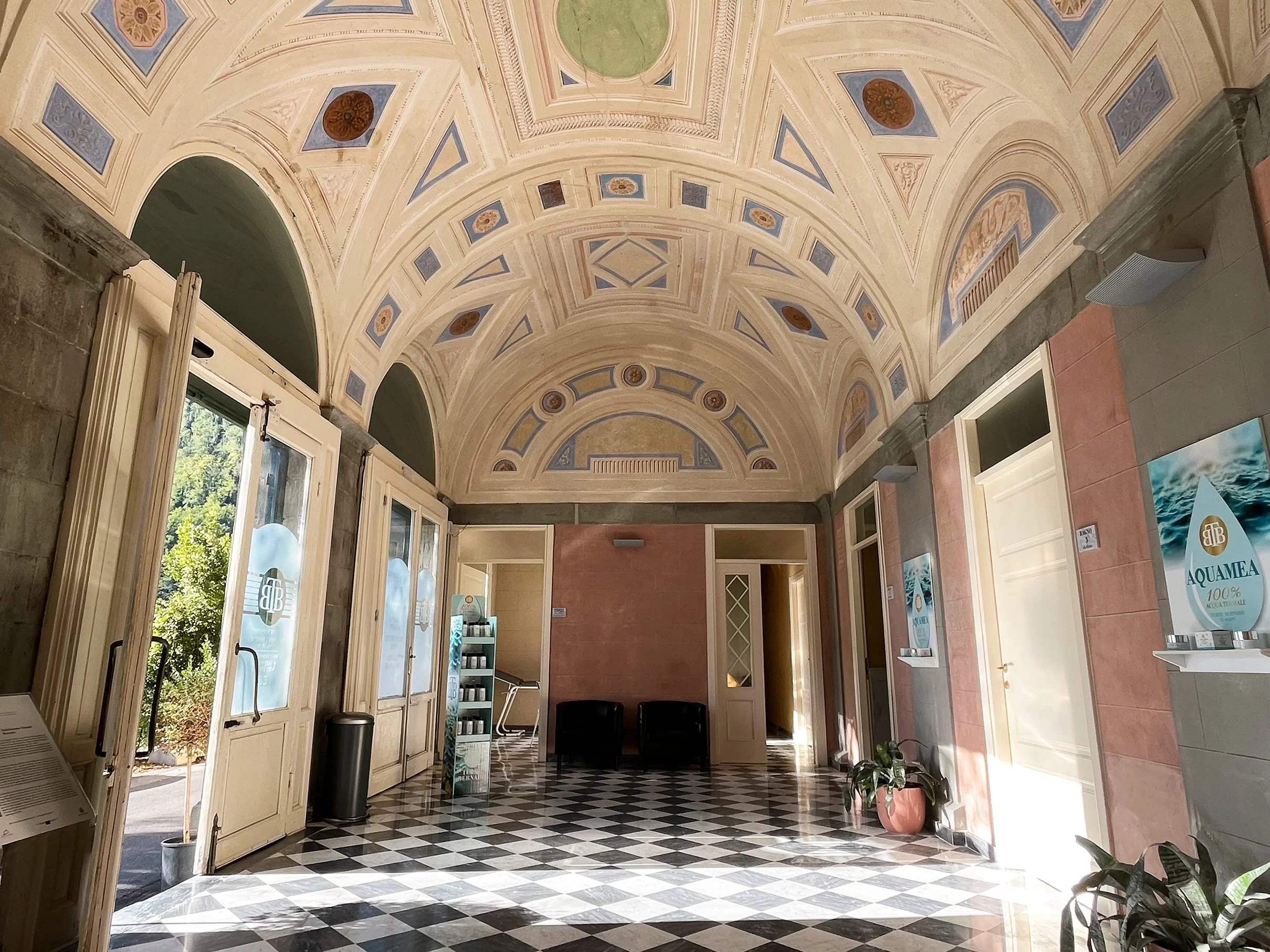
The spa’s stunning reception area
I had booked a mud wrap (the mud is naturally rich in mineral salts), a thermal bath and half hour back massage. There was no storytelling or sales pitch leading into the treatment (this was a spa in a small Italian town, after all): the mud was slapped on, I was prompted when to wash it off in the thermal waters of a stone tub, and after twenty minutes directed to the room for my massage. Despite their efficient practicality (and my uncertainty of what was coming next), it was all quite relaxing. I almost fell asleep during the mud wrap, and the massage was wonderful.
Tizi kindly picked me up once I was done, and I rounded out my last day on retreat with one final group dinner. I went to bed that night satisfied with what I had achieved over the past week, recharged and ready to resume travelling, and grateful for the time I had gotten to spend with this bunch of creative and interesting people.