
What I’m Reading: Impossible Creatures – The Poisoned King by Katherine Rundell
There are times in life when the stars simply align. That time I stayed at an Edinburgh hotel for one night – the same night that Katherine Rundell was doing an author talk at the church directly opposite – was one of those times.
It was September 2025 and my first trip to Edinburgh. The city’s strong literary scene was a huge drawcard for me, and I researched ahead of time to see what events were on. When I found Rundell’s event and saw the location, it was clearly meant to be (Had I manifested this…?). She was launching her second book in the Impossible Creatures series, and I had adored the first one (you can read my post on it here).
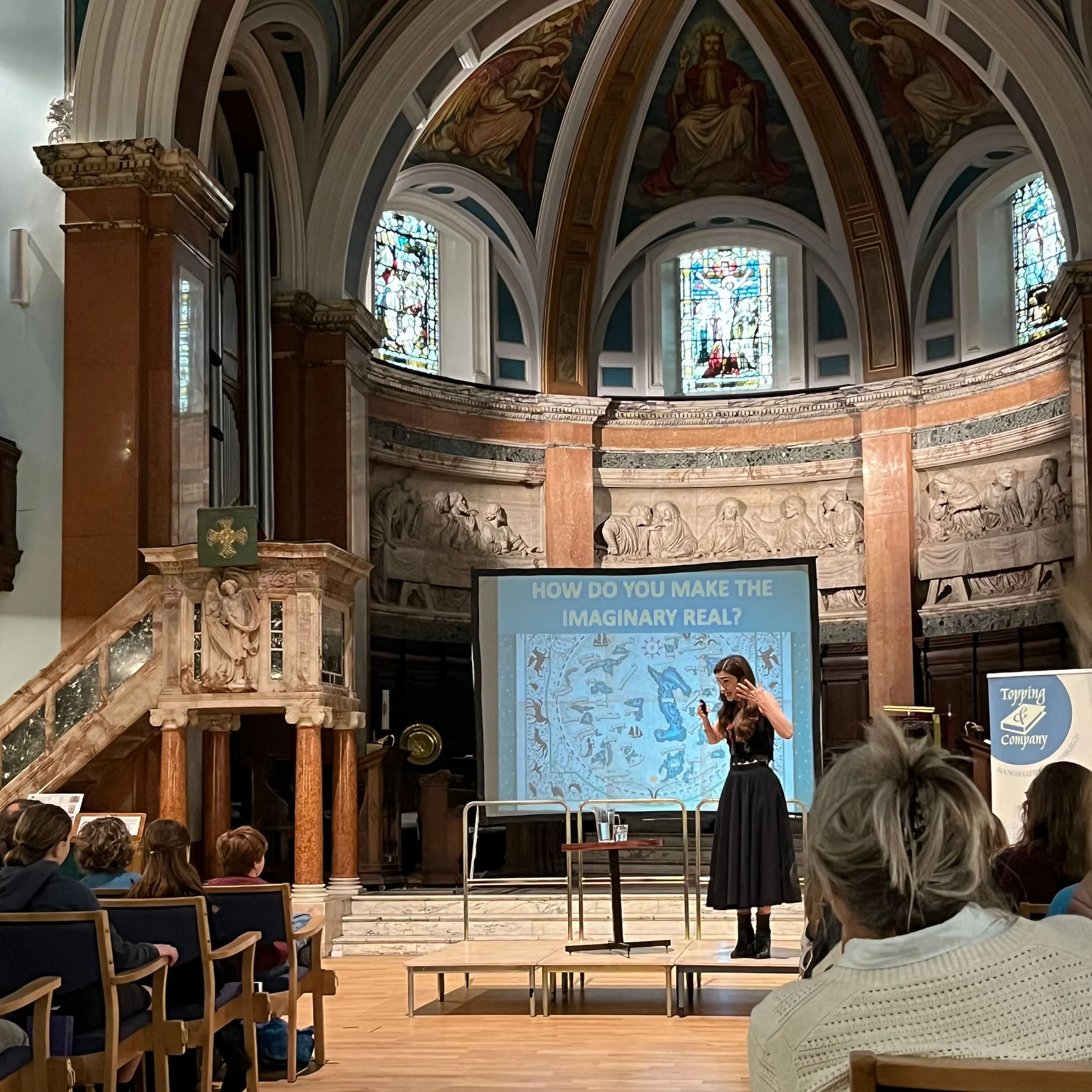
The author in the flesh inside the beautiful Parish Church of St Cuthbert
One of my favourite things about Rundell’s writing is her voice; I think of it as a classic storytelling voice that makes me want to huddle in close to the story being told, a voice that creates intrigue and mystery, but also carries a heavy dash of wit.
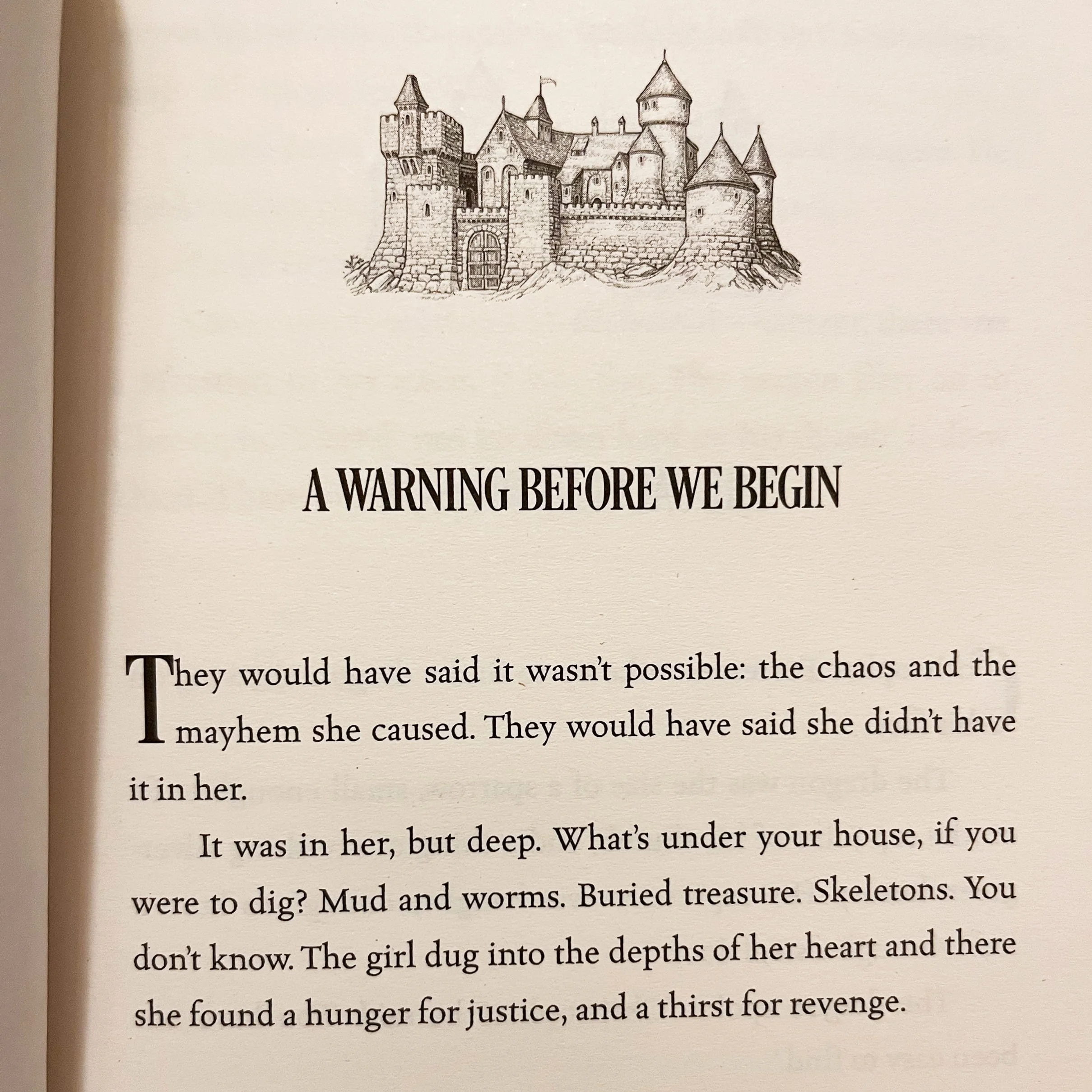
The warning at the start of the book
Like some of my other favourite series (such as His Dark Material by Phillip Pullman), these are children’s books that deal in big, complex themes, and I think are ripe for the reading at any age. In this post, I’m going to dive into some of those themes; but first, let’s recap what the book is about.
The plot
If you haven’t read the first Impossible Creatures, do that before starting this book, as there are many returning characters. This second book starts with Christopher being awoken by Jacques, the miniature dragon. He tells the boy that the great dragons in the Archipelago are dying, and no one knows why; they have asked for Christopher’s help.
As Christopher embarks on his journey, we meet a new character, Anya, princess of one of the islands of the Archipelago and a similar age to Christopher. When Anya’s grandfather, the king, dies, and her own father is accused of poisoning him, she begins to investigate, but is almost killed herself. She is saved by a sphinx, the same sphinx that is helping Christopher. Here, the two characters meet and join forces. At first, it seems they have two separate missions: to save Anya’s dad, and to save the dragons. But as the story progresses, we learn how the two crimes are linked.
The big themes
These are what I think of as the big themes, or big ideas of the book. And just a note, there will be some spoilers from here onwards.
Betrayal
The inciting incident that drives Anya’s journey is the Shakespearean act of both personal and political betrayal by her uncle. Not only does her uncle murder his own father, the King, but he frames his brother (Anya’s father) for the crime. He then tries to poison Anya, removing anyone in the way of his path to the throne. It’s a classic yet simple tale of power and greed, and the evils that the morally weak will resort to gain power and wealth.
Righteous anger and injustice
This betrayal triggers a deep rage in Anya and a hunger for revenge. I love that this book doesn’t shy away from or trivialise a girl’s anger; it is shown as very real and very justified, as Anya responds to the cruelty and unfairness of what has happened to her grandfather and father.
In a world where women and girl’s anger is often minimised, dismissed or discouraged – society wants us polite and smiling – Rundell gives us permission to sink into this emotion. I recognised some of myself in Anya, and I think a lot of readers will too. I’ve also felt rage at the world’s injustices, and Rundell’s descriptions capture the force of these emotions wonderfully.
Anya couldn’t feel her body: it had vanished, and its place was pure, burning fury.
Soon her stomach was tight as a drum from the water, but still there was the burning in her throat. … She knew what it was, that burning in her body. It was a thirst for revenge.
“For the first time, he was terrified of her. He saw it in her face. He saw, in the girl in front of him, the capacity to kill.”
– Anya’s uncle
Not letting the evils of the world taint your own heart
While I love how Anya’s rage is validated, equally important are the characters who recognise what is going on with the young girl and offer her wisdom.
The following passage made me stop and put the book down:
“Do not – ” and his voice was softer now – “let Claude Argen decide how you feel about the world. Fight him, yes. But keep the fight outside your body, not inside it. I can see you vibrating with rage from halfway across a room, girl. Do not let men who are not fit to touch the corner of your shoe decide how you feel about being alive. That way lies misery and broken bones.”
They say the right book finds you at the time, and with everything going on in the world right now, I needed to hear those words. In one 276-page children’s book, Rundell acknowledges, validates and gives words and descriptions to our pain and anger – then provides us our salvation. To stay true to ourselves, to fight but to maintain our inherent goodness, is how we win.
In the book’s climax, when Anya’s uncle realises she could kill him if she wants to, a magical pendant she is wearing gives her a glimpse of her future if she takes this path; she sees herself as a cold woman who never smiles, a leader people fear, with hatred a poison in her heart. In that moment, she makes a choice – she wants nothing to do with death. (Don’t worry, death by dragons is a fitting end to her uncle, and the final chapter of the book).
Protecting the natural world
This is a strong theme throughout both books. After all, the Archipelago is the place creatures of myth have retreated to as the world was no longer safe for them.
In this book, we see the death of several beautiful, majestic, ancient dragons, all because of the greed of one man. You can’t not think of the damage humans have done to our own world, in the pursuit of power and profits. The greed of entire corporations, industries, countries… yet often at the head of these, sits one man. They have slain our dragons.
It’s a chilling thought, and one that’s stayed with me after I finished reading.
The book’s design
I want to finish off by taking a moment to admire the gorgeous edition I purchased at the book talk, pre-signed by the author. It’s a hard cover with a foiled, embossed book jacket, and the cover underneath is STUNNING. The page’s edges are dyed green, there’s a beautifully illustrated map (in full colour at the back of the book), a bestiary (guide to the various fantastical creatures), and small illustrations at the top of each chapter.
I really wish all books were like this – it makes the physical experience of reading a book that much more special.
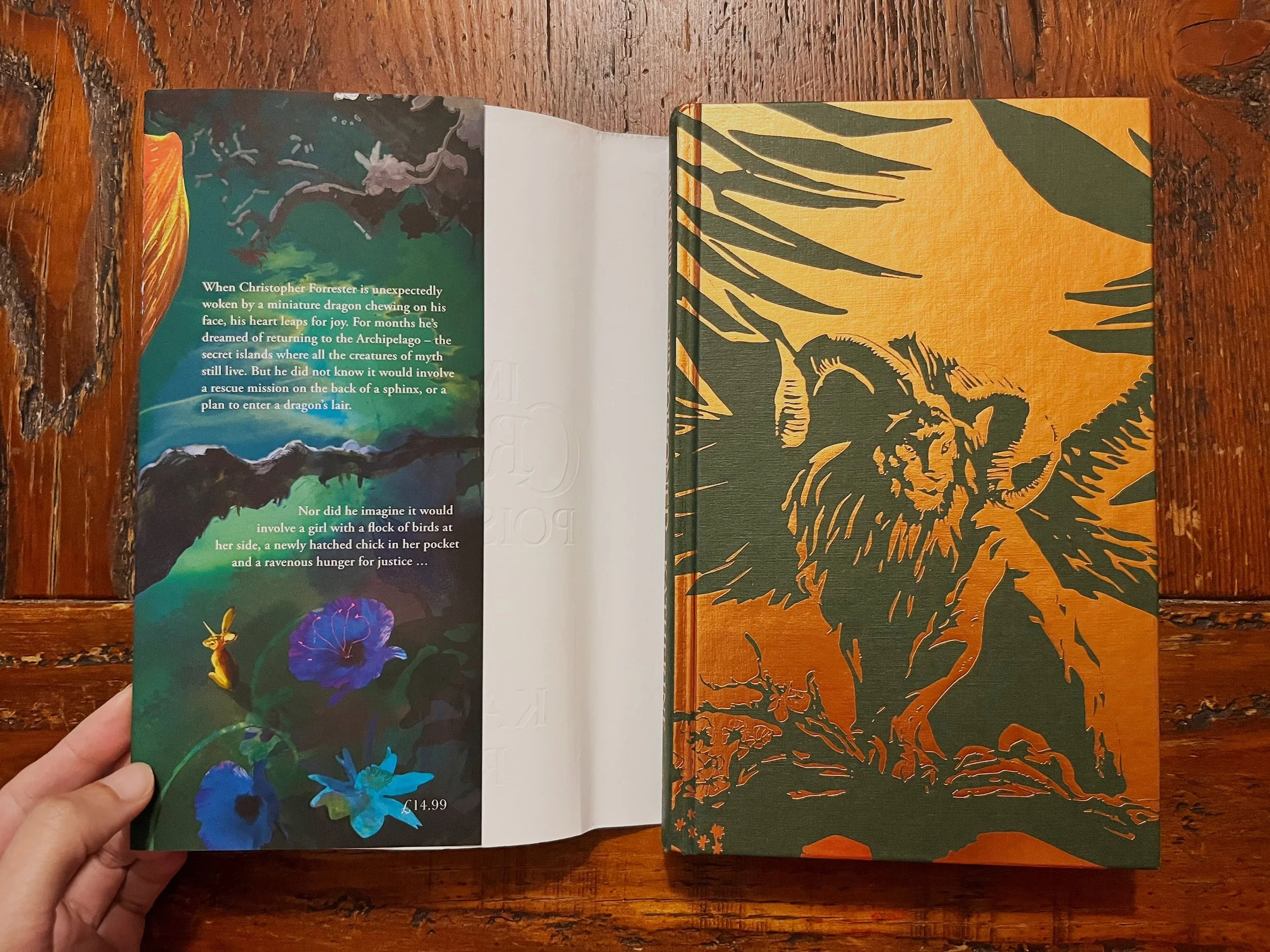
The gorgeous hard cover underneath the book jacket, gold-foiled and showing a mythical winged lion with horns.
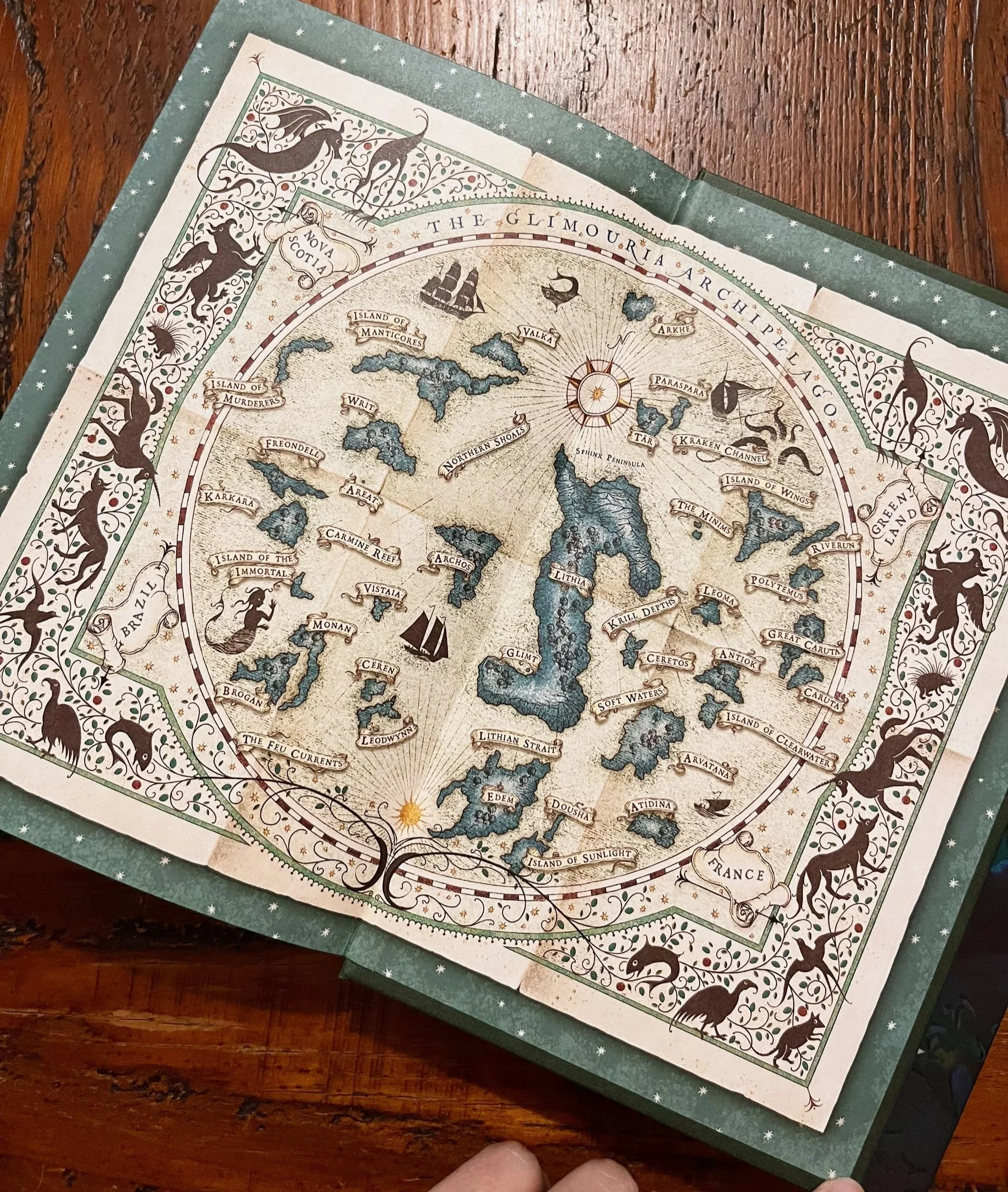
Beautiful illustrated map of the islands of the Archipelago
This post contains affiliate links.